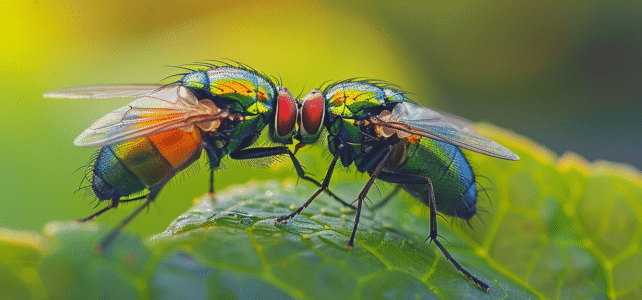
The reproduction of flies, a fascinating and complex life cycle, often remains unknown to the general public. These ubiquitous insects begin their reproductive journey with an intriguing mating ritual, followed by the laying of eggs in specifically chosen environments to promote the survival of the larvae. The larvae develop in various habitats, often rich in organic matter, which provides them with the necessary food for their growth. Understanding this process offers insight into the survival strategies of these creatures and their ecological role in nature, including decomposition and the recycling of organic matter.
The reproduction process in flies
The life cycle of the fly inevitably begins with the act of procreation. In the housefly, scientifically known as Musca domestica, the female lays her eggs in moist organic matter, a choice dictated by the need to provide future larvae with a suitable environment for their development. Females of this species can lay between 500 and 1,000 eggs, demonstrating a massive reproductive strategy to ensure the species’ survival.
Other species, such as the fruit fly or Ceratitis capitata, opt for specific laying sites, such as the surface of fermenting fruits. In contrast, drain flies prefer damp and dark areas, while green and blue flies play a key role in forensic studies, their presence being an indicator in estimating the time of death.
The stages of metamorphosis are integral to the life cycle of these insects. After laying, the eggs evolve into larvae, then into pupae, before becoming adults. Each stage of development is part of a logic of genetic and ecological adaptation that has allowed flies to colonize various habitats around the world.
The question arises: What does a fly nest look like? The truth is that flies do not build nests in the traditional sense. The female lays her eggs in places that will directly serve as larval habitats, without requiring an elaborate structure. The survival of the larvae thus depends on the female’s initial choice, an instinctive decision that ensures the newborns an immediate and abundant food source. Consider the ingenuity of these creatures: their reproduction guarantees the continuity of the species through meticulous selection of the larval environment.
The larval habitat and its importance in the development of flies
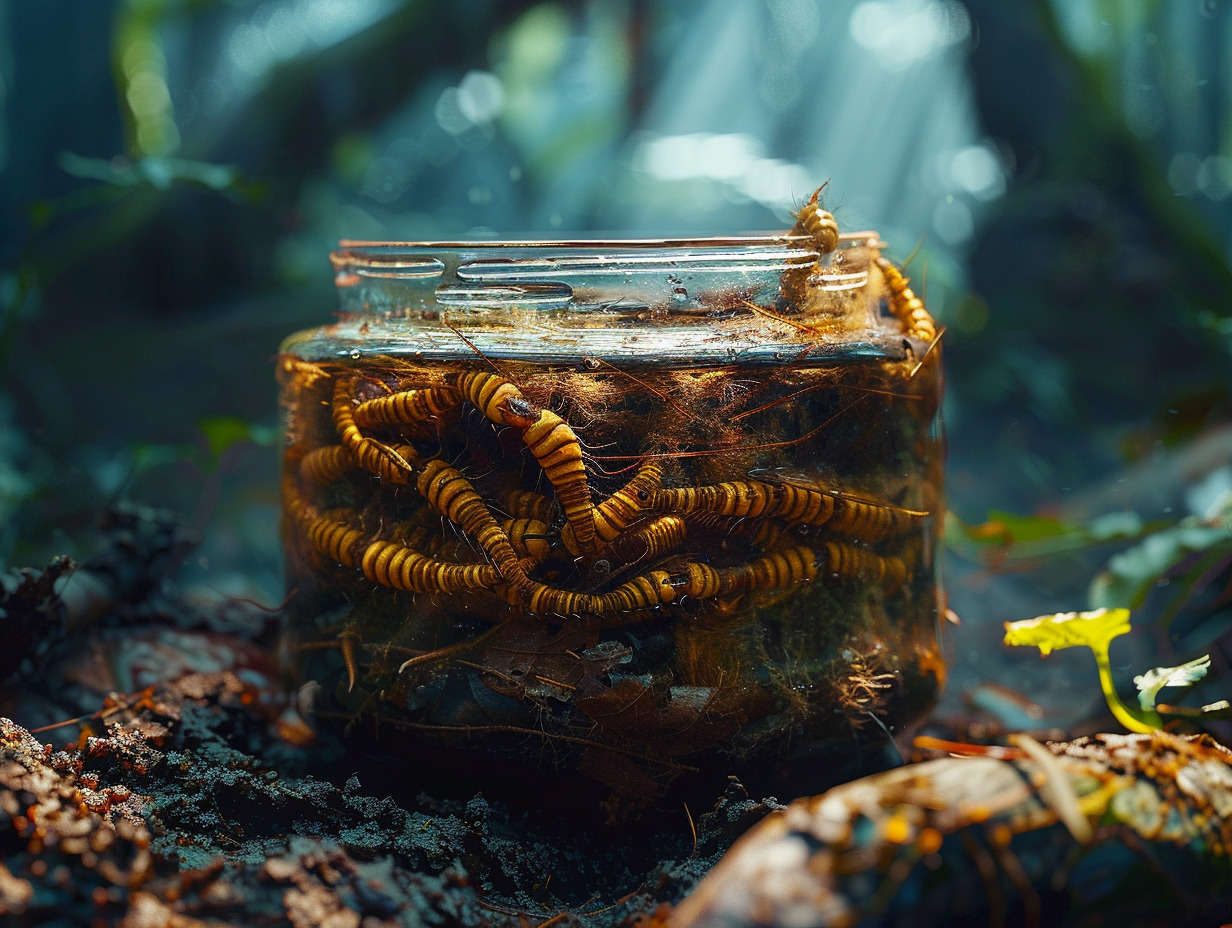
The larval stage of flies is a critical chapter in their development. Houseflies, for example, are meticulous in choosing their larval habitat. They establish themselves near food sources: the larvae depend on decomposing organic matter, such as feces or food waste. This habitat choice is derived from the need to meet the intense nutritional needs of these voracious larvae, whose rapid growth is essential for their survival.
The role of water in maintaining these habitats is crucial. Houseflies, as well as other species such as fruit flies or drain flies, prefer areas where water is present. Humidity is a key factor that impacts not only food availability but also protection against predators, such as spiders.
The genetic diversity of flies is directly influenced by the variety of their larval habitats. Wetlands, with variable water flow, offer unique ecological niches that allow different species of flies to coexist and evolve. Consider how these conditions shape the genetic flow of these insects, enabling them to adapt to changing environments, a fundamental factor in these times of climate change.
The adaptation of flies to the world around them is evident in their evolution and ecological distribution. Climate change, for example, influences the geographical distribution of insect species. Flies are not spared by this phenomenon and find themselves forced to modify their reproductive behavior and selection of larval habitats to align with the ever-fluctuating nature of their environment.