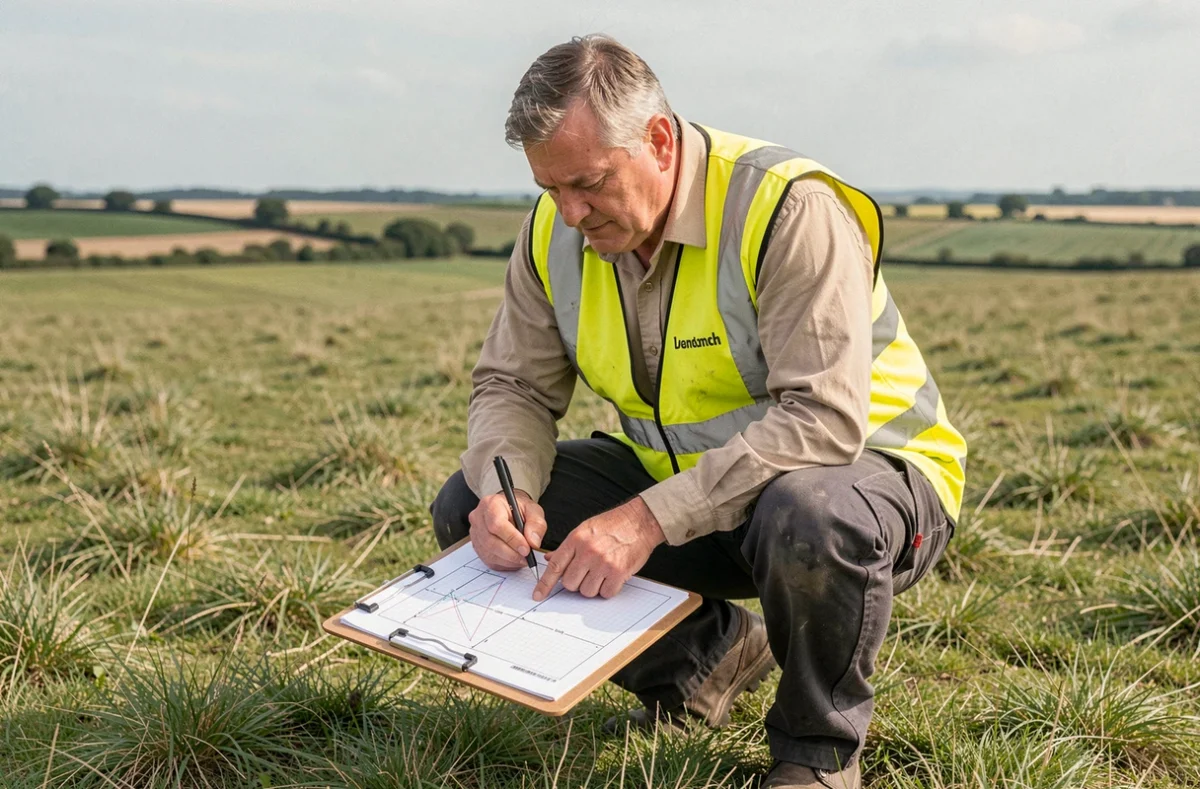
A plot listed as 8 ares in an advert, and you want to know how many square metres that represents. The calculation takes just one multiplication. An are is a metric unit of area equal to exactly 100 m². Multiply the number of ares by 100 to get the area in square metres. This formula does not depend on the plot’s shape or dimensions: it simply expresses the equivalence between two units of area.
Why area units are trickier than units of length
Length conversions use factors of 10: one metre equals 10 decimetres. Area conversions, however, use factors of 100 between neighbouring metric units. This is the source of most mistakes.
When converting metres to decimetres for length, you multiply by 10. When converting square metres to square decimetres, you multiply by 100. Square units change by factors of 100, not 10. Confusing the two means getting the answer wrong by a factor of 10, which completely throws off the result.
To avoid this mistake, always write down the intermediate equivalence before calculating. Writing “1 are = 100 m²” on paper or on screen before multiplying is enough to keep the right reference point in mind.
When you convert ares to m², this intermediate step remains the most reliable habit, whether you are working with small or large areas.

Are-to-square-metre conversion formula and practical examples
The formula is straightforward: number of ares x 100 = area in m². It works for any value, whether whole or decimal.
Examples using common values
- 3 ares x 100 = 300 m², the typical area of a small urban garden
- 8.5 ares x 100 = 850 m², a common ballpark figure for a building plot in a suburban area
- 25 ares x 100 = 2,500 m², a modest-sized agricultural plot
- 0.5 are x 100 = 50 m², just a little larger than a studio apartment
Reverse conversion: square metres to ares
To convert square metres to ares, divide by 100. A 1,200 m² plot is 12 ares. Divide by 100 to convert back to ares is the reverse rule to remember.
Quick reference table
| Ares | Square metres |
| 1 | 100 |
| 5 | 500 |
| 10 | 1 000 |
| 15 | 1 500 |
| 20 | 2 000 |
| 50 | 5 000 |
This table covers the values most commonly found in property listings and cadastral documents.
Ares, hectares, square metres: understanding each area unit
You will often come across three units in property listings and land deeds: the square metre, the are and the hectare. Their hierarchy is simple.
One hectare equals 100 ares, or 10,000 m². The are sits between the square metre and the hectare. Square metres are used for smaller areas (apartments, studios). Ares are suitable for residential plots and small parcels. For farms and forests, hectares are used instead.
The are is not an official International System of Units (SI) unit (the SI recognises only the square metre and its multiples). It is nevertheless still commonly used in everyday language and land transactions in France.
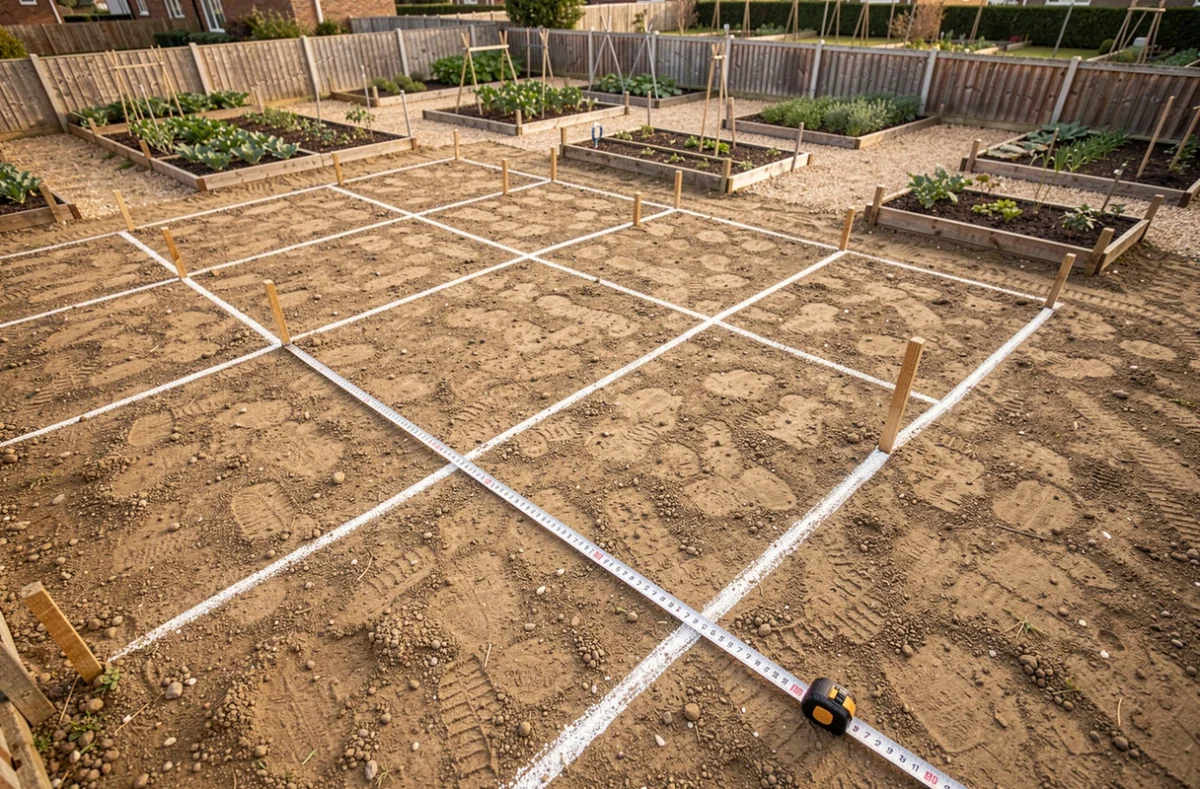
Converting to m² is not enough to assess a plot
Knowing a plot’s area in square metres tells you nothing about its shape, boundaries or how reliable the measurement is. This is something a simple conversion cannot resolve.
The same area can correspond to plots with very different shapes. One are, or 100 m², could be a square with 10 m sides, a 5 m by 20 m rectangle, or a triangular plot. The conversion gives you an area, not a plan.
Cadastral area and actual area
The area recorded in a cadastral document is an administrative figure. It may differ from the actual area measured on the plot. An accurate conversion does not guarantee that the stated area is accurate.
Converting 8 ares to 800 m² is a correct calculation. Checking that the plot actually measures 800 m² is another matter, requiring a boundary survey or a topographical survey by a licensed surveyor.
Shape and buildability
Two 600 m² plots do not offer the same building possibilities. A regular rectangle makes it possible to position a house with comfortable setback distances. An L-shaped or flag-shaped plot of the same area imposes constraints on access and building placement.
Before assessing a plot based solely on its converted area, take three factors into account:
- The plot’s geometric shape, visible on the cadastral plan
- The exact boundaries, confirmed by a boundary survey agreed by all parties
- The measurement method used to establish the area (on-site survey, cadastral calculation, estimate)
Converting ares to square metres is a starting point, not a conclusion. It gives you a usable figure, but that figure is no substitute for a plan or a physical measurement of the plot. A plot correctly converted into square metres but incorrectly measured in the first place still has an uncertain area.