
The French automotive market is going through a period in which powertrain options are multiplying, while the usual rules of thumb are no longer enough to make a decision. A CEE grant for buying or leasing a used electric car came into effect on September 1, 2026, changing how buyers calculate the total cost.
Meanwhile, the EV Index 2026, published by HERE Technologies and SBD Automotive, highlights a persistent gap between the perceptions of drivers who use combustion-engine vehicles and the real-world experience of electric car owners, particularly when it comes to the quality of charging stations near home.
Choosing a powertrain without home charging: a case no one clearly addresses
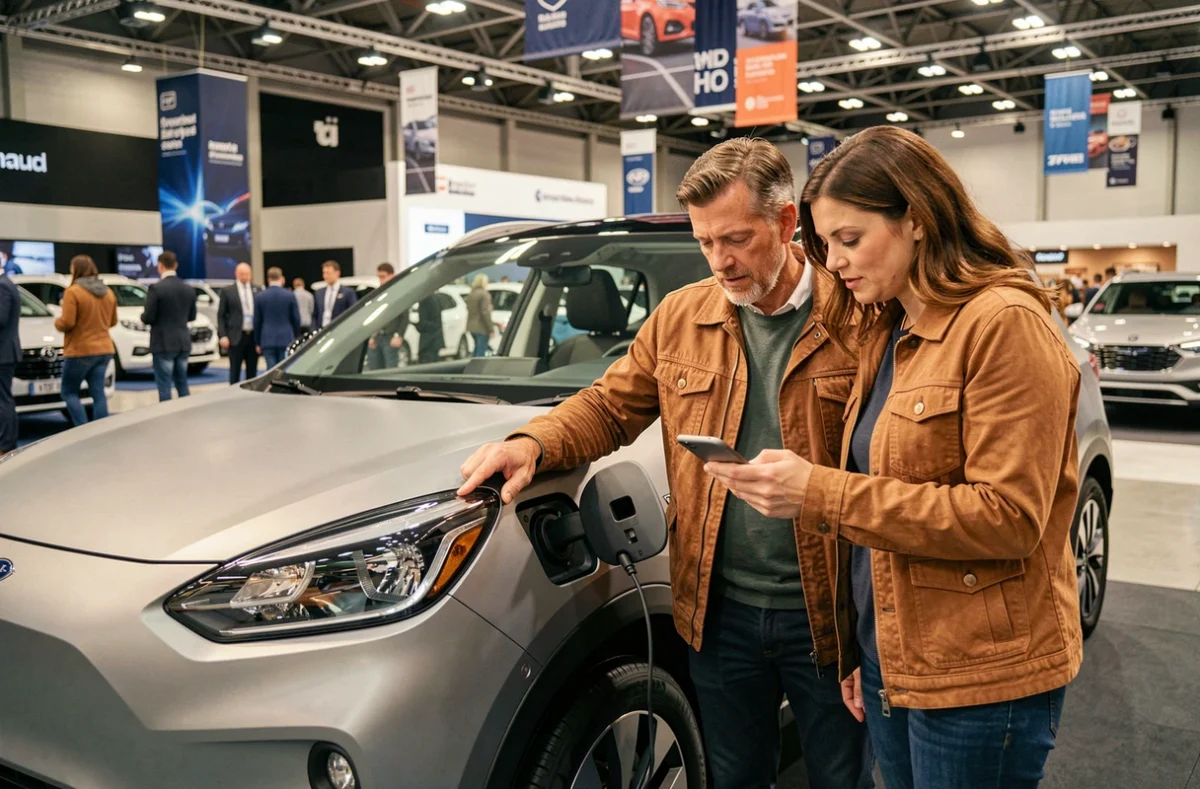
A tenant in an apartment building, a homeowner without an enclosed garage, an employee whose workplace parking lot has no charging station: these profiles account for a significant share of French motorists. Choosing a fully electric powertrain depends on reliable, regular access to charging. Without a dedicated home outlet, drivers become entirely dependent on the public network.
The EV Index 2026 survey, covered by Les Numériques, reports that some electric car drivers have abandoned trips for fear of running out of range and have encountered difficulties with public charging stations. For anyone who regularly takes long journeys, this is no minor concern.
Three options are worth considering for this type of driver:
- A non-plug-in hybrid (HEV) operates without ever needing to be plugged in. It reduces fuel consumption in urban and suburban driving by recovering energy during braking, without requiring any charging infrastructure.
- A plug-in hybrid (PHEV) only offers genuine savings if its battery is recharged frequently. Without access to a charging point, the extra weight of the battery increases fuel consumption when running solely on the combustion engine, making the vehicle less efficient than a standard HEV.
- A recent diesel remains a sensible choice for high-mileage motorway drivers (more than 20,000 km per year), provided they check the environmental penalty applicable to the model they are considering and plan for traffic restrictions in low-emission zones.
The EV Index 2026, cited by L’Automobile Magazine, confirms this trend: a growing share of electric car owners are considering switching back to a hybrid or a range-extender model for their next purchase. The message is clear: your powertrain should be chosen first and foremost based on your actual access to charging, not on an idealized scenario.
Following the latest news from Jb Autos makes it easier to compare available offers and developments in the used-car market across these different powertrains.

Used electric cars: recalculating total costs and incentives
The introduction of the CEE grant for used electric cars changes the equation. Until now, public incentives had focused almost exclusively on new vehicles. This grant can be combined with the remaining ecological bonus and, in some regions, local incentives.
The relevant figure is no longer the list price. It is the total cost of ownership over three to five years: purchase price minus incentives, plus insurance, energy and maintenance. A used electric car listed at a higher price than an equivalent combustion-engine model may work out cheaper over time if charging is available at home or at work at domestic electricity rates.
But the equation changes for drivers without a regular charging point. Relying exclusively on public rapid chargers, where electricity costs considerably more per kilowatt-hour than at home, significantly reduces the financial advantage of an electric car. Before signing, map out your everyday charging options rather than simply checking the network’s nationwide coverage.
Company fleets and company cars: an underestimated factor
Companies are accelerating the electrification of their fleets. An article in Le Figaro dated November 10, 2026, reports that electric vehicles account for a significant share of company registrations, while noting that charging remains a frequently cited obstacle for businesses themselves.
For an employee with a company car, the choice of powertrain does not depend solely on personal preference. Access to a charging station at work and at home determines how convenient the car is to use day to day. A company that provides an electric SUV without installing a charging station in its parking lot creates a logistical burden that falls directly on the employee.
Three things to check before accepting an electric company car:
- Will the company cover the cost of installing a home charging station or reimburse electricity costs?
- Is the workplace parking lot equipped with charging stations, and are there enough of them for the fleet?
- Are regular business trips (to clients or remote sites) compatible with the vehicle’s real-world range, taking winter conditions into account?
Car maintenance: what changes with your choice of powertrain
Your choice of powertrain has a direct impact on maintenance costs, and not always in the way you might expect. An electric car eliminates oil changes, timing belts and clutches. Its brake pads wear more slowly thanks to regenerative braking. On paper, maintenance costs are lower.
In practice, replacing a battery module outside the manufacturer’s warranty can cost more than the vehicle’s residual value on an older used model. Checking the remaining battery warranty (in terms of both duration and mileage) is essential before buying any used electric car.
A non-plug-in hybrid requires maintenance similar to that of a conventional combustion-engine car, with a modest additional cost for its auxiliary electric system. Diesel cars, often criticized, remain mechanically reliable on long journeys, provided the diesel particulate filter is allowed to regenerate at the recommended intervals—a process that requires regular driving at a steady speed.
The 2026 automotive market cannot be reduced to a simple choice between combustion and electric. The CEE grant for used cars, renewed interest in hybrids documented by the EV Index, and the practical challenges of charging all point to a landscape in which different drivers need different powertrains. Checking your journeys, charging access and battery warranty before signing remains the most reliable way to avoid making the wrong choice.