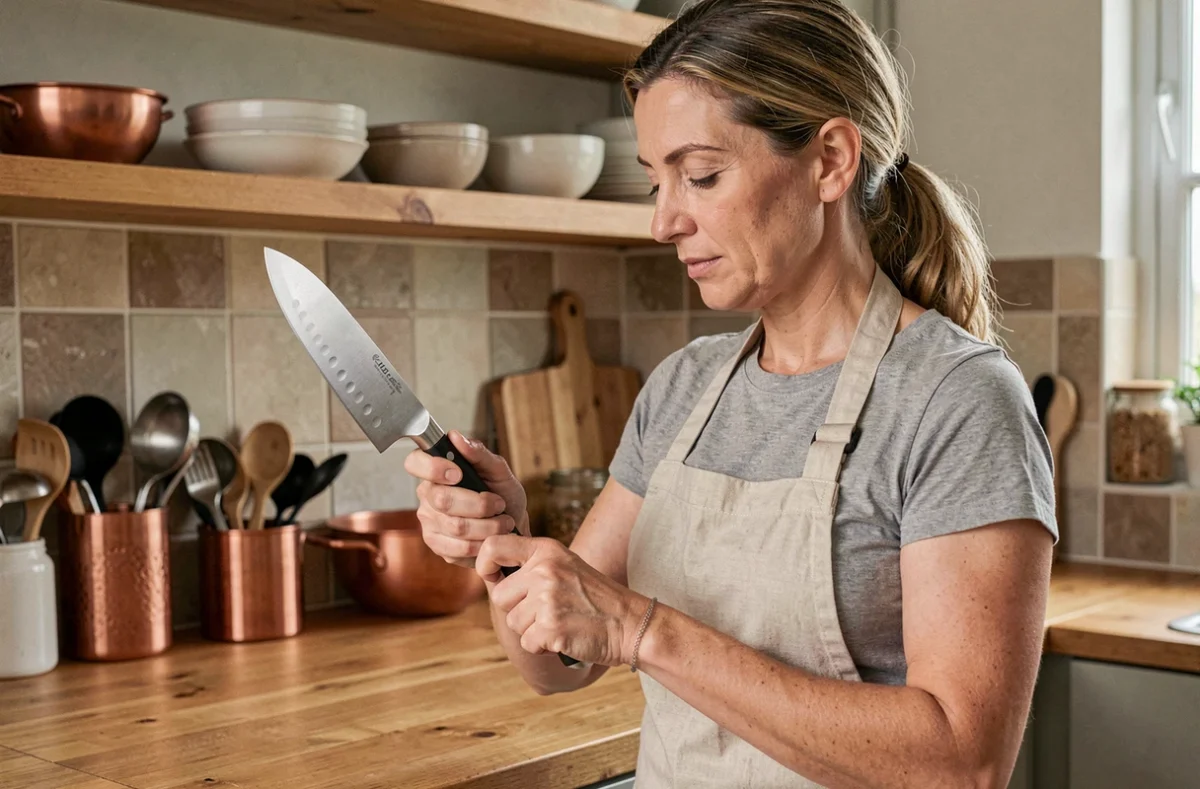
In France, most households already have the essentials for everyday cooking. The problem is rarely a lack of equipment, but rather an accumulation of items that are poorly suited to their needs, energy-intensive or difficult to maintain. Choosing kitchen equipment for preparing delicious meals is not simply a matter of drawing up a shopping list: it means weighing durability, compatibility with your heat source and the impact on energy consumption.
Coatings on frying pans and saucepans: what marketing claims don’t tell you
Terms such as “stone coating”, “titanium” and “ceramic” appear on most frying pans sold in supermarkets. These marketing labels don’t describe the actual composition of the coating. In many cases, the base material is still PTFE, a compound belonging to the PFAS family.
The label “PFOA-free” may sound reassuring, but it covers just one substance among thousands. “PFOA-free” does not mean “PFAS-free”. To make an informed choice, the only reliable information is the detailed composition of the coating, which some manufacturers publish and others do not.
France’s recently adopted PFAS law does not apply to PTFE non-stick pans. These products are not currently subject to any sales ban. This means consumers are left to make the trade-off themselves: choose bare stainless steel, cast iron or a non-stick coating, while understanding the limitations of each option.
A catalogue such as Le Jardin D’Épices’ kitchen equipment lets you compare several ranges of products and review their technical specifications before making a decision.
Cooktop and cookware compatibility: the trap of replacing everything
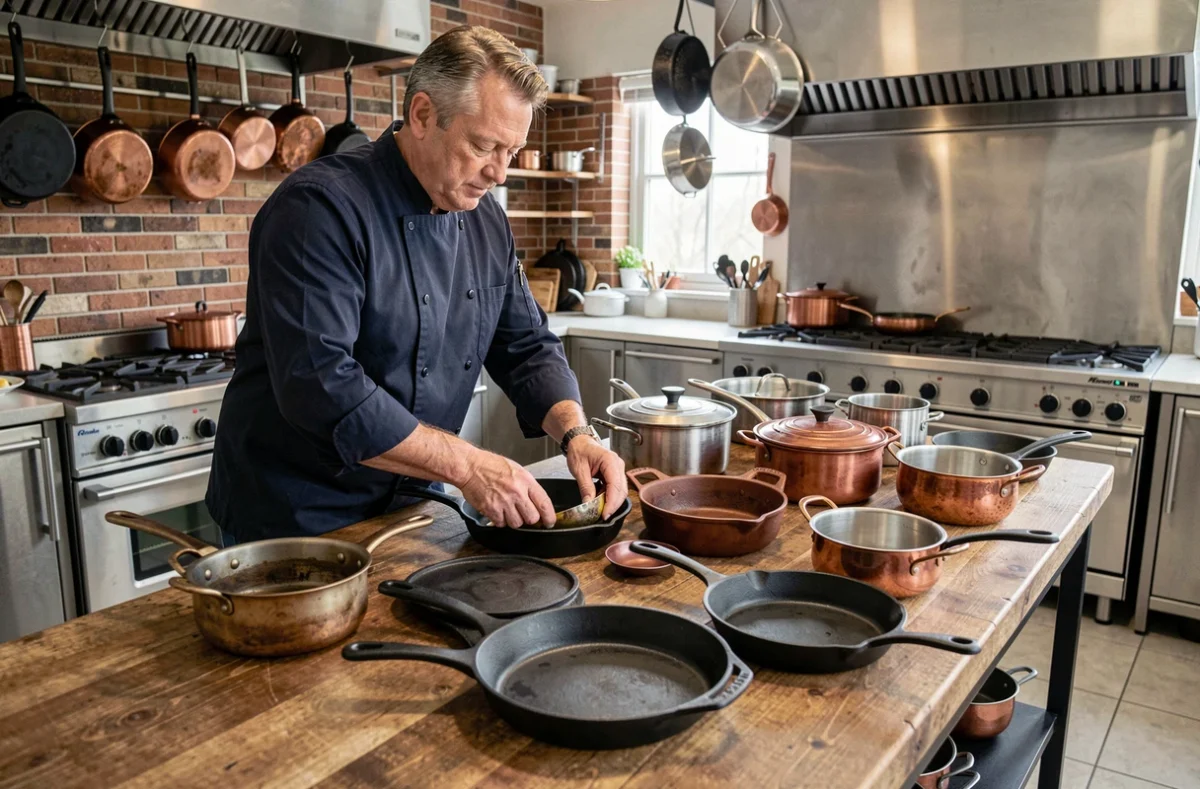
Switching to induction, often recommended as a way to reduce energy bills, comes with one important consideration that is rarely highlighted. Induction requires cookware with a ferromagnetic base: a standard aluminium or copper saucepan will not heat up at all on this type of cooktop.
A simple test is all it takes before replacing your entire set of cookware. If a magnet sticks to the bottom of a pan, it is compatible. In a household with stainless steel saucepans featuring magnetic bases, switching to induction requires no new purchases.
Ceramic glass or induction: the choice depends on the cookware you already own
Ceramic glass cooktops heat by radiation and work with all types of cookware, including glass and earthenware. For households that already own a varied selection and want to limit new purchases, this option avoids throwing away utensils that are still in working order.
Online comparisons of energy use between induction and ceramic glass cooktops are based on standardised test conditions. Actual consumption varies depending on the size of the cookware, cooking time and household habits. Claiming that one uses a fixed percentage less energy than the other would be an oversimplification.
Durable kitchen equipment: reduce waste without replacing everything
The environmental impact of kitchen equipment is not limited to the material a pan is made from. It also depends on how long items last, whether they can be repaired and how much waste is generated when they are replaced.
- Uncoated cast iron lasts for decades if properly seasoned. It requires no chemicals or abrasive sponges to maintain—just wipe it clean while warm and apply a little oil
- Food-grade stainless steel withstands thermal shock, is dishwasher-safe and retains its properties over time. A slightly thicker base distributes heat more evenly and makes up for the lack of a non-stick coating
- Even high-end non-stick pans have a limited lifespan of just a few years with regular use. Every replacement creates waste that is difficult to recycle because of the combination of metal and polymer
Keeping just one non-stick pan for delicate dishes such as omelettes and crêpes, and using stainless steel or cast iron for everything else, is a compromise that reduces both replacement purchases and waste.
The mistake of buying a complete cookware set
Ten-piece sets sold at attractive prices can be a poor fit for your needs. They often include duplicate sizes or accessories that rarely get used, such as a 16 cm sauté pan or a milk pan that seldom leaves the cupboard. Three well-chosen cooking pieces cover most everyday recipes: a 28 cm frying pan, a 20 cm saucepan and a stockpot or Dutch oven.
Buying individual items lets you choose the right material for each use and spread out the cost. A decent chef’s knife and a paring knife are enough for chopping vegetables, meat and fish, without taking up space with a six-knife block when half the blades will stay in the drawer.
Oven cooking: materials and energy consumption
Choosing the right oven dish directly affects cooking time and therefore energy consumption. An enamelled cast-iron dish retains heat, allowing you to lower the oven temperature partway through cooking without compromising the result. Borosilicate glass heats up faster but also cools down more quickly.
Only preheat the oven when the recipe calls for it is one of the habits that can make a difference to your energy bill. For a gratin or a slow-cooked dish, putting it in a cold oven and extending the cooking time slightly can reduce energy use without affecting the flavour.
Conventional or fan-assisted cooking
Fan-assisted cooking distributes heat more evenly, allowing you to cook at a lower temperature—by a few degrees. For everyday dishes such as roast chicken or grilled vegetables, this setting also reduces the time spent in the oven.
Not all ovens offer this option. With an older conventional oven, placing the dish in the centre and avoiding opening the door during cooking are the simplest ways to limit heat loss.
Choosing the right kitchen equipment does not require an exceptional budget or replacing every utensil. Check compatibility with your cooktop, read the coating composition and prioritise durable items in three or four key categories to make everyday cooking easier without accumulating unnecessary equipment.