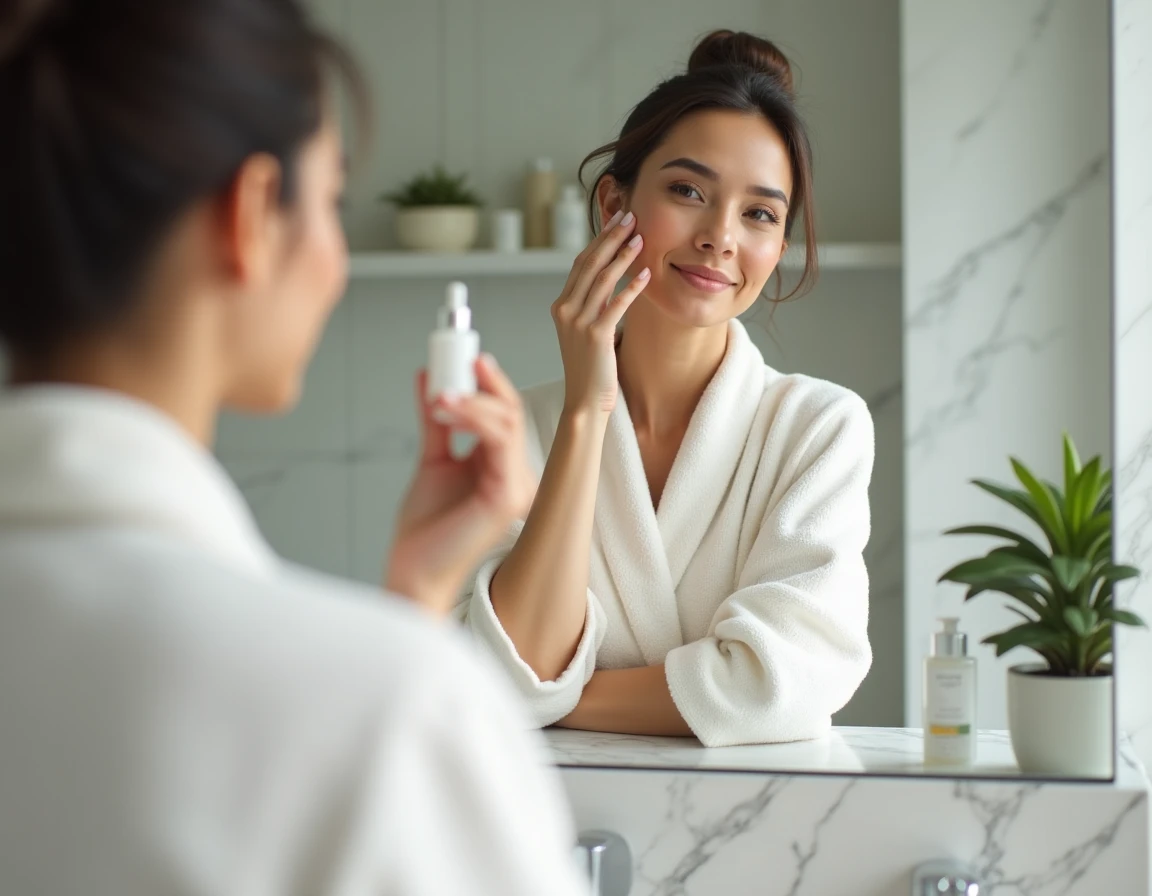
Your morning cream has stopped working for weeks, your complexion looks dull despite regular hydration, and you feel like you’re piling on products without visible results. The problem rarely lies in the number of treatments applied. It is more about their order, their compatibility with your skin, and a few technical gestures that most beauty routines neglect.
Skin Barrier and Over-Treatment: The Trap of Powerful Actives
Have you noticed that your skin feels tighter after using a glycolic acid serum several nights in a row? This phenomenon has a name: over-treatment sensitization. Concentrated actives (retinoids, AHAs, high-dose vitamin C) weaken the protective layer of the epidermis when combined carelessly.
In recent years, sales of so-called “skin barrier” treatments have significantly increased. Repair creams, “cica” textures, serums with panthenol or ceramides: these formulas aim to restore what overly aggressive routines have damaged. The reflex to adopt is simple: one powerful active per routine, morning or evening, never both.
To explore other approaches suitable for each skin type, Masca Online’s beauty tips detail combinations of treatments that respect this balance.
Specifically, if you use a chemical exfoliant in the evening, your morning routine should be limited to a gentle cleanser, a moisturizer, and sun protection. Nothing more. The skin needs time to rebuild between two applications of actives.
Order of Application for Face Care: The Texture Rule
Applying a serum after a thick cream is like putting on a raincoat before a sweater. The serum, being more fluid, can no longer penetrate. The rule is to go from the lightest to the thickest, regardless of the brand or range used.
Morning Sequence for a Radiant Complexion
- Gentle cleanser (gel or micellar water, without harsh soap) to remove the sebum accumulated overnight
- Hydrating or antioxidant serum, applied on slightly damp skin to enhance absorption
- Moisturizer suitable for your skin type, in a thin and even layer
- Sun protection, even on cloudy days, as UV rays penetrate clouds and accelerate skin aging
This sequence takes less than five minutes. The often overlooked point concerns sun protection. Since the implementation of Regulation (EU) 2023/1545 amending Annex III of Regulation (EC) No 1223/2009, several UV filters are more strictly regulated in Europe. Some brands have discreetly reformulated their sun products. Check the manufacturing date of your sunscreen: an old formula may contain filters that are now limited or under reevaluation.
Evening Sequence for Skin Repair
In the evening, the skin enters a regeneration phase. This is the time to introduce a targeted active (retinol, lactic acid, niacinamide) after cleansing. Finish with a night cream or a vegetable oil that “seals” in hydration. If your skin is reactive, alternate every other night between an active and a repairing treatment with ceramides.
Hybrid Makeup and Skincare Products: The Trend That Simplifies the Routine
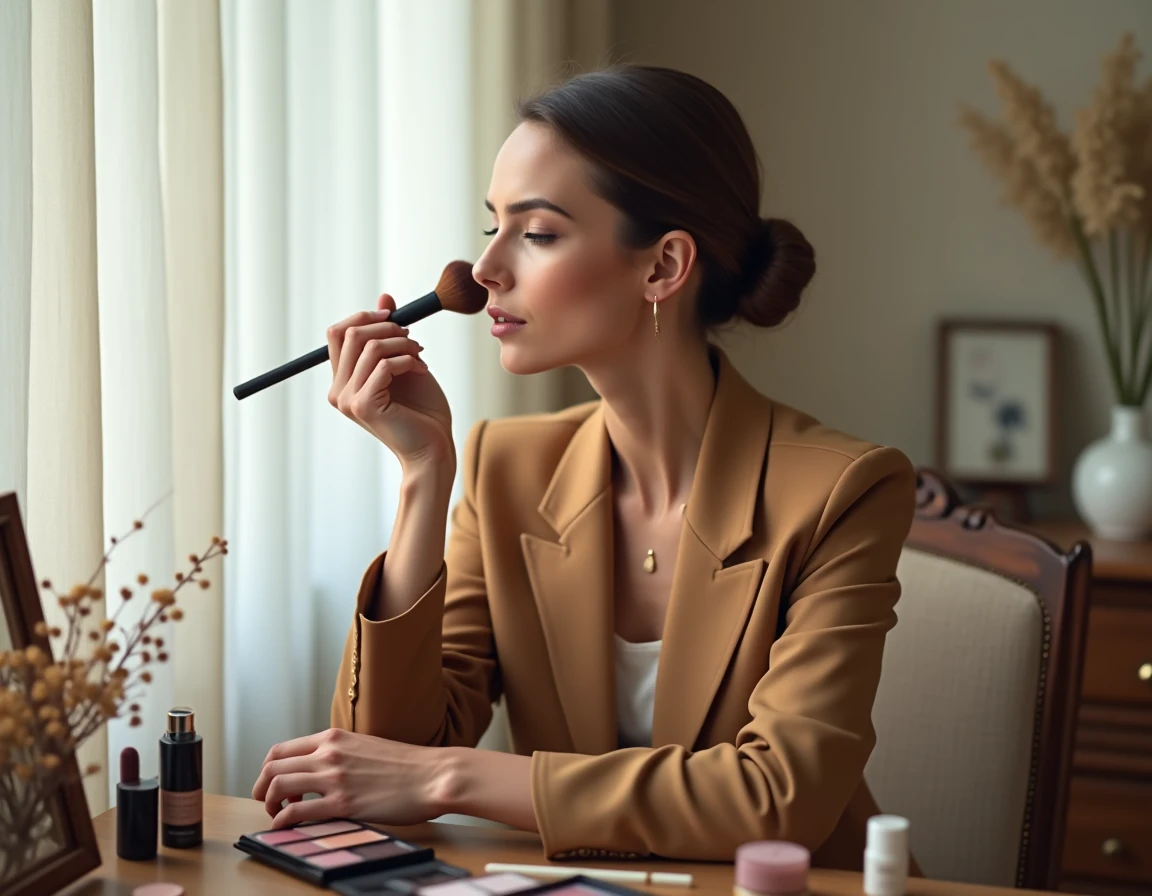
The era of heavy foundation as the final step in a ten-product routine is fading. In recent years, TikTok and Instagram algorithms have accelerated the trend of “skin minimalism” and “no makeup makeup.” The principle: fewer layers, more care integrated into makeup.
Hybrid products combine light pigments and hydrating actives in a single formula. A tinted BB serum replaces both the morning serum and foundation. A tinted lip balm nourishes while adding a touch of natural color.

The concrete advantage: you reduce the number of products applied to your face, which limits the risks of ingredient interaction and decreases the load on your skin barrier. For sensitized skin, this approach makes a real difference.
Regulatory Controls and Composition: Reading a Skincare Label in France
The DGCCRF has intensified its controls over cosmetic product claims in France in recent years. The terms “natural,” “clean,” or “dermatologically tested” do not all have the same regulatory value.
Have you ever turned a bottle to read the INCI list without understanding much? Two markers are enough for an initial sorting:
- Ingredients are listed in descending order of concentration. If the active touted by the packaging appears at the end of the list, its presence is symbolic
- Fragrance allergens (linalool, limonene, citronellol) are listed at the very end. Their presence indicates a scented product, which can be problematic for reactive skin
- A product without fragrance or denatured alcohol is better suited for skin weakened by active treatments
This quick reading takes a few seconds and avoids recurring purchasing mistakes. It usefully complements any beauty routine, regardless of budget.
The next time you add a product to your daily routine, ask yourself one question before applying it: does your skin need it today, or are you just following the habit? Adapting your treatments day by day according to the actual condition of your skin remains the most effective and least expensive gesture.