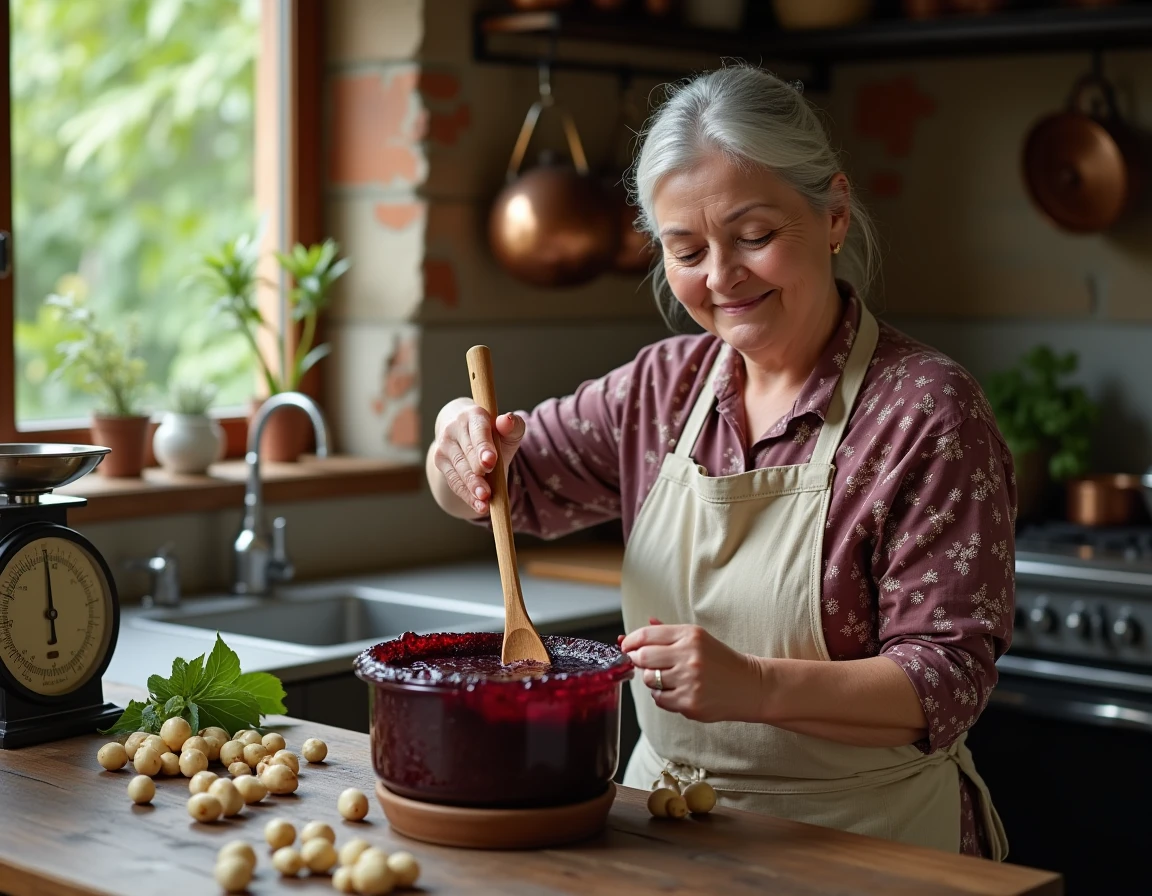
The mulberries from the white mulberry tree (Morus alba) are fruits with juicy, sweet, and slightly tangy flesh, which are distinctly different from blackberry fruits due to their softer texture and higher water content. This particularity changes the way we approach jam-making: the cooking process, sugar ratio, and preservation follow different rules than those of a classic jam.
Natural pectin and sugar ratio: what makes this jam special
Most jam recipes assume that a gelling agent must be added or that a strict ratio of 1 kg of fruit to 1 kg of sugar must be followed. The mulberries from the white mulberry tree change the game.
These fruits are naturally rich in pectin and acidity, two components that allow the jam to set without added gelling agent. You can reduce the ratio to 1 kg of fruit for 500 g of sugar, provided you extend the cooking time to compensate for the reduced sugar. The result is a less sweet jam, where the fruit flavor dominates, which aligns well with the delicate aromatic profile of these mulberries.
For those who wish to explore other preparations using this fruit, a recipe for white mulberry jam also details interesting variations such as coulis and jellies.
The direct trade-off of this reduced sugar is an increased risk of mold during long-term storage. Sugar acts as a preservative: by reducing it, you also lower the antimicrobial barrier. Two options then arise to secure your jars.
- Classic sterilization: immerse your closed jars in boiling water for fifteen to twenty minutes, then let them cool in the bath. This method ensures preservation at room temperature for several months.
- Refrigerator storage: if you prefer to skip the sterilization step, keep your jars cool and consume them within weeks of opening.
- Hot jar inversion: just after filling, turn the jars upside down on their lids for about ten minutes. This technique creates a partial vacuum, but it does not replace proper sterilization for reduced-sugar versions.
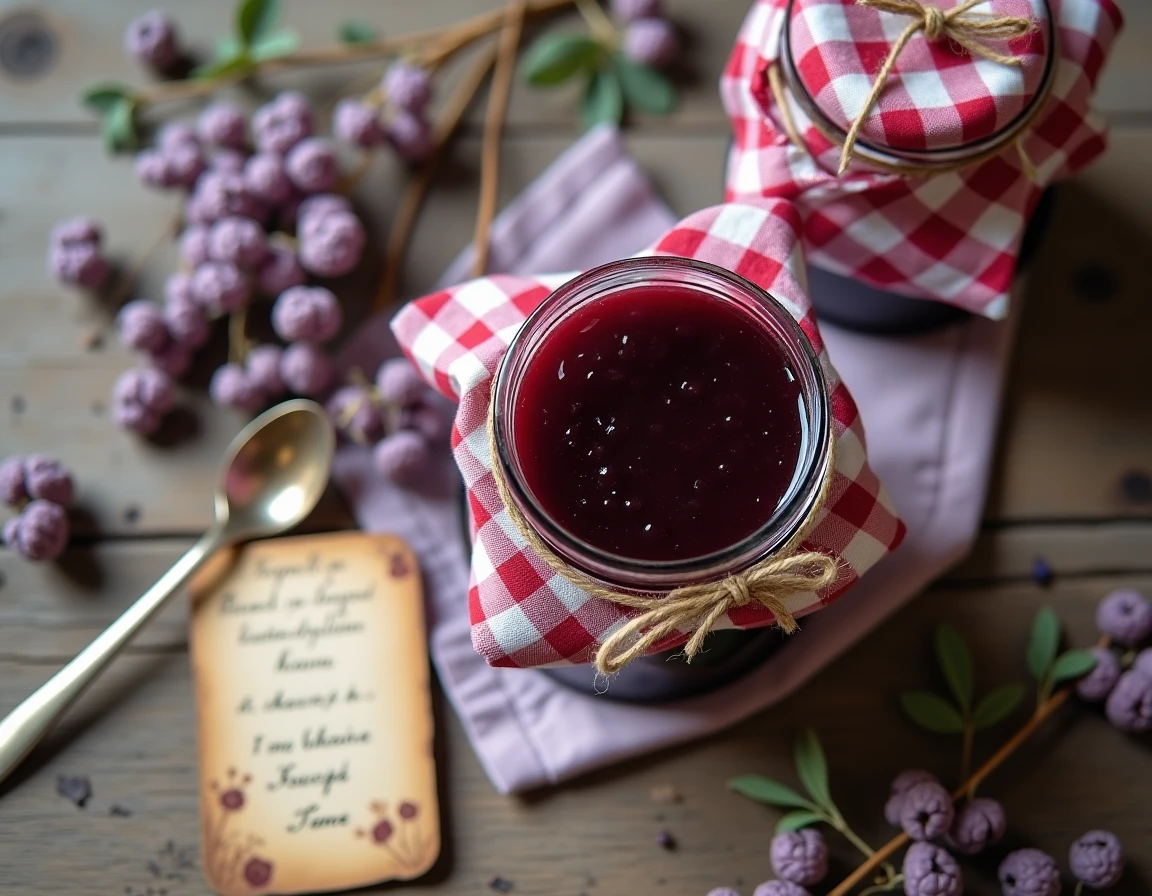
Cooking white mulberry jam: managing water content
The high water content of white mulberries presents the main technical challenge. These fruits release a lot of juice within the first few minutes of cooking, resulting in a very liquid texture before evaporation does its job.
Start by macerating the fruits with the sugar for a few hours, ideally overnight. This maceration causes an osmotic exchange: the sugar extracts some of the water from the fruits even before cooking. This way, you start with less liquid to evaporate.
The cold plate test to check for setting
Place a plate in the freezer before you begin. When the jam seems thick enough, drop a small spoonful onto the cold plate. If the drop sets within a few seconds and wrinkles when you push it with your finger, the jam has reached the gelling point. If it flows, continue cooking for a few more minutes.
With white mulberries, this point comes later than with blackberries, precisely because of the extra water. Expect a significantly longer cooking time than a standard recipe. Keep the heat medium and stir regularly to prevent sticking at the bottom.
Double preparation of coulis and jam: optimizing a large harvest
The white mulberry tree produces its fruits over a short window, often just a few days, with an abundance that far exceeds what a single batch of jam can absorb. Rather than turning everything into jam, a mixed approach allows you to maximize a peak harvest.
The principle relies on two successive cookings. The first, short, is used to obtain a filtered coulis. Cook the fruits for a few minutes over high heat, just enough to burst them, then strain the mixture through a fine sieve or colander to remove the seeds. This coulis, smooth and fragrant, freezes easily or can be bottled for desserts, yogurts, cocktails.
The remaining pulp, thicker and more concentrated, goes back into cooking with the sugar to create a dense and flavorful jam. Since some of the water has already been extracted with the coulis, this jam sets faster and develops a sturdier texture than if you had used the whole fruit.
Seeds and pits: should they be removed?
White mulberries contain small seeds that do not bother everyone, but can make the jam’s texture grainy. If you dislike this sensation, passing through a sieve is the only effective solution. A food mill with a fine grid also works, provided you process the fruits while still warm to facilitate passing.
Keep in mind that sieving removes some material, so plan for a slightly higher quantity of fruit than the recipe indicates if you want to yield the same number of jars.
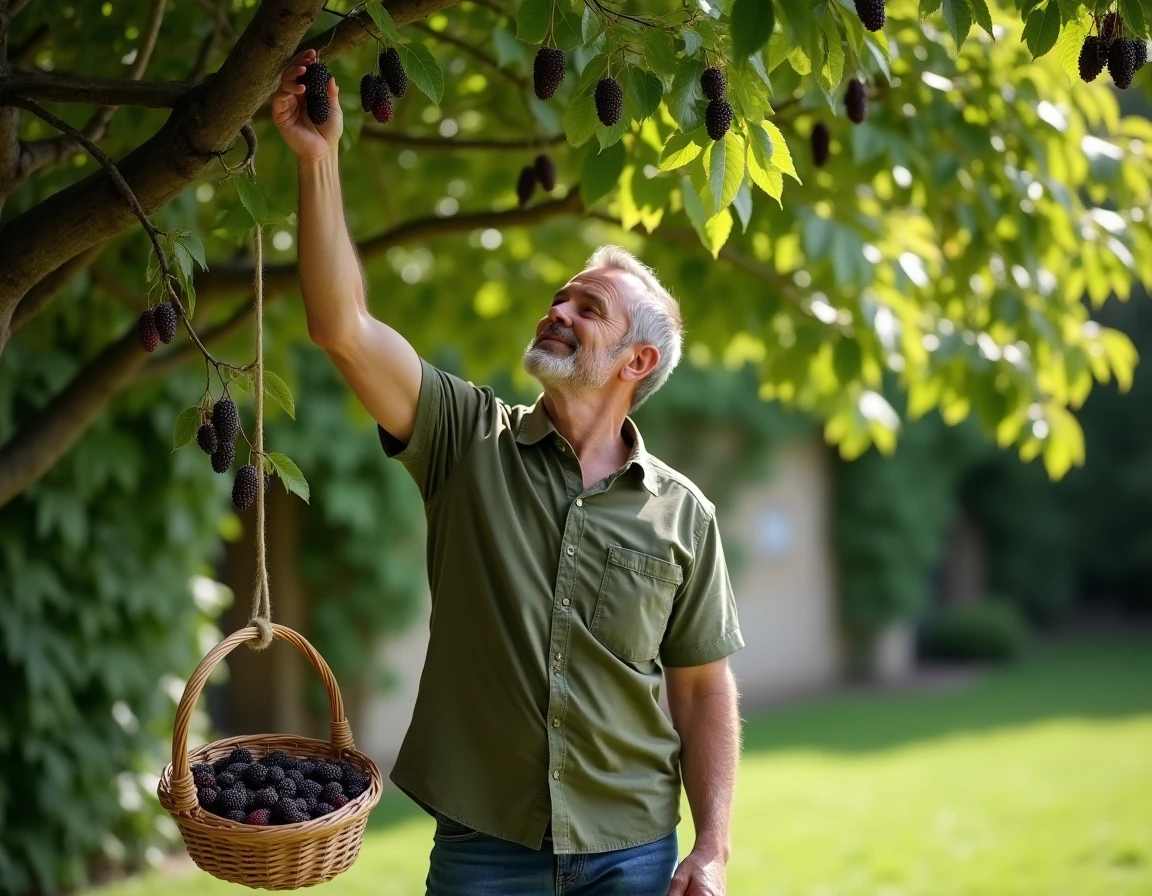
Storage and jarring of homemade jam
Filling should be done hot, immediately after cooking. Use previously boiled glass jars and new or perfectly intact lids. Fill to about one centimeter from the top.
For reduced-sugar versions, sterilization remains the safest method. Classic versions (1:1 ratio) store well at room temperature with a simple inversion, but this is not the case when reducing to a 1:0.5 ratio.
Labeling may seem trivial, but at a minimum, note the production date and the sugar ratio used. Year after year, this allows you to adjust the recipe according to your preferences and the ripeness of the fruits, which varies by harvest.
White mulberry jam also freezes very well in small containers, a practical option when the harvest exceeds your pantry capacity. A defrosted jar can then be stored in the refrigerator like any opened jam.