Pietra d’Alba does not appear in any Italian administrative reference database. Neither ISTAT nor ANCI lists a municipality by that name. The term has been circulating since 2023 in the French-speaking travel blogosphere, sometimes linked to the Marches, sometimes to Piedmont, without fixed coordinates. We are faced with a tourist storytelling destination rather than a strictly mapped location, and this is precisely what makes the subject interesting to dissect.
Pietra d’Alba and Geographic Ambiguity: A Case Study in Niche Tourism
The articles mentioning Pietra d’Alba share a common trait: none provide precise geolocation. Some refer to Piedmontese hills, others to Marchigiane cliffs. This geographic slippage is not accidental.
Since 2023-2024, travel blogs with a strong SEO focus have been using Pietra d’Alba as a case study for a hidden destination. The place appears in “Read also” boxes or contextual hooks, without field reports or original photographs. A guide dedicated to Andelys in Normandy, for example, includes a link to “Pietra d’Alba Italy: hidden treasure between nature and terroir” as a simple internal linking lever.
We observe here a well-oiled mechanism: the evocative name serves as an imaginary “hidden treasure” before serving as a practical guide. “Pietra” refers to stone, “Alba” to dawn or whiteness. Together, they form a toponym that sounds authentically Italian, credible enough to fuel a travel narrative without requiring material evidence.
For those wishing to discover Pietra d’Alba in Italy through the available content, this reading grid allows one to distinguish the narrative part from the documentary part.
Stone Heritage and Hilltop Villages: What Pietra d’Alba Captures of Rural Italy
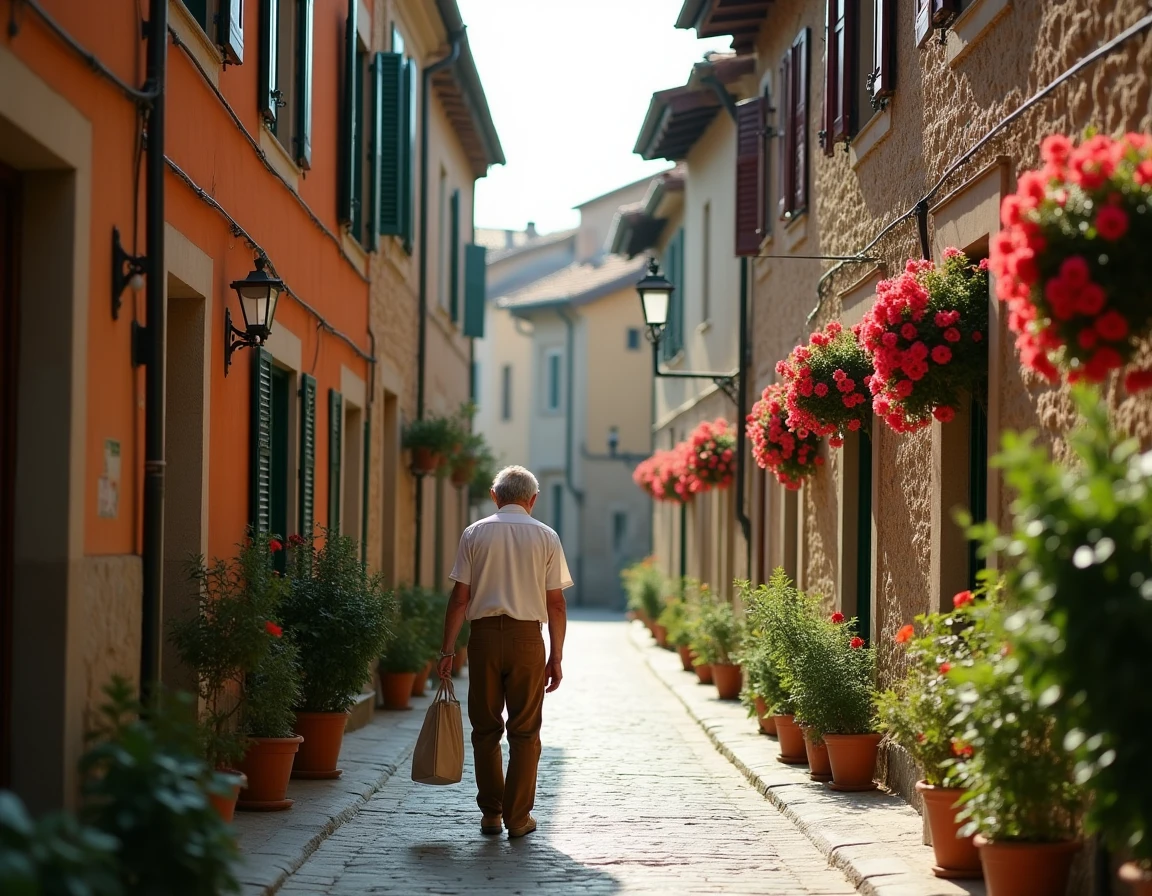
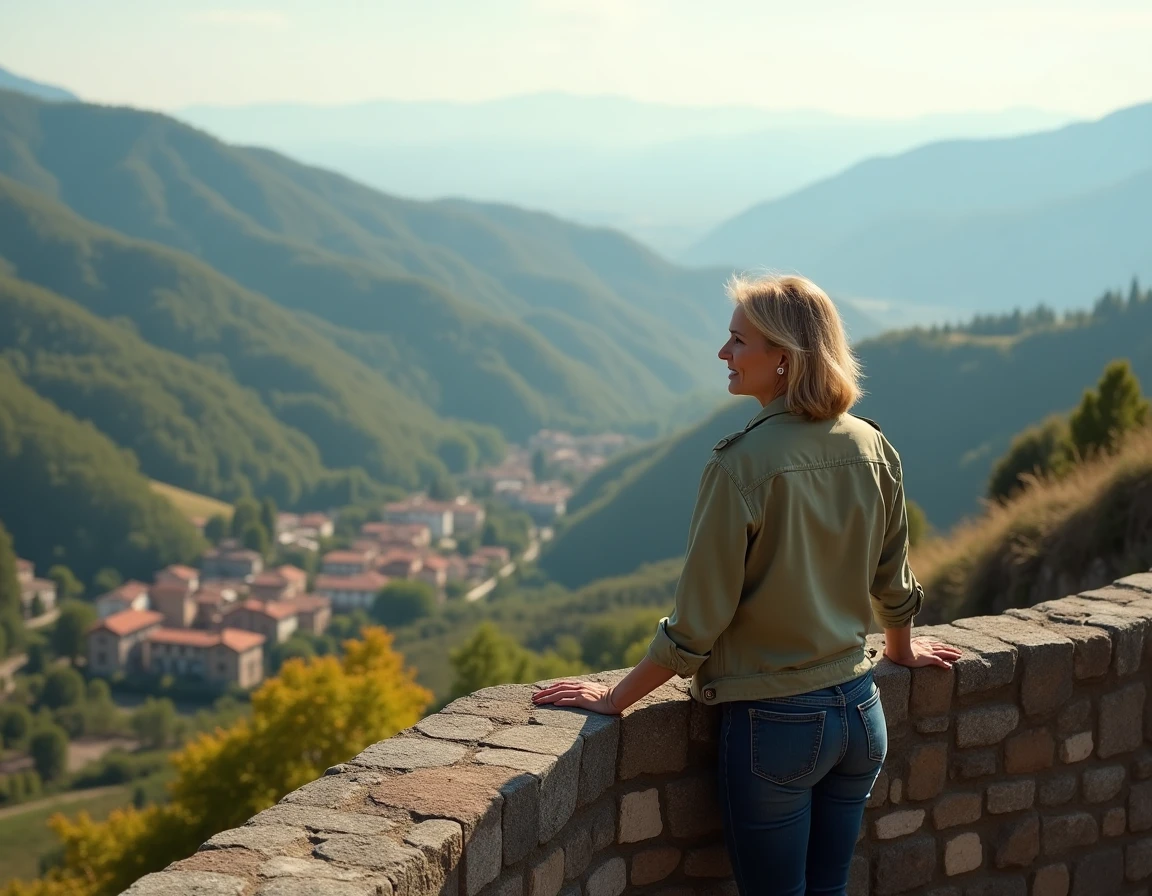
Even though the place remains elusive, the descriptions associated with it refer to a tangible reality of inland Italy. The recurring elements (cobblestone streets, medieval castle, Romanesque chapels, vineyard terraces) correspond to dozens of real villages scattered between Piedmont and the Marches.
Italy has a considerable heritage of stone villages built between the 11th and 15th centuries. Many are classified as borghi, these historic hamlets that the Fondazione Borghi protects and promotes. Pietra d’Alba, in its narrative version, aggregates the characteristics of these borghi:
- A fortified core on high ground, often organized around a castle or watchtower, with walls made of local stone (sandstone, tuff, limestone depending on the region)
- A Romanesque or pre-Romanesque church whose crypt sometimes preserves frescoes dating back several centuries, typical of Italian rural sacred art
- Paths connecting the village to terraced crops, where olive trees and vineyards have structured the landscape since the Middle Ages
This architectural model can be found in Calcata in Lazio, Pentedattilo in Calabria, or Civita di Bagnoregio in Viterbo. Pietra d’Alba functions as an archetype of these places, which explains why the descriptions seem both precise and interchangeable.
The Question of Roman Heritage
Several sources associate Pietra d’Alba with Roman remains. Central and northern Italy are indeed filled with sites where Roman foundations serve as the basis for medieval constructions. The reused baths in cellars, the columns integrated into church facades: these superpositions are documented throughout the peninsula.
Attributing specific Roman remains to Pietra d’Alba without archaeological sources would be risky. We recommend treating these mentions as a generic trait of the Italian tourist narrative rather than as verified facts.
Italian Culture and Terroir: Beyond the Picturesque Narrative
The content surrounding Pietra d’Alba systematically mentions a rich terroir, between vineyards and olive oil production. This is no coincidence: the link between built heritage and agricultural culture defines the identity of Italian borghi.
In Piedmont, the Alba area (the real city, capital of Langhe) is world-renowned for its Barolo and Barbaresco wines, as well as for white truffles. If Pietra d’Alba takes its name from this geography, the connection with this UNESCO World Heritage wine region takes on an additional dimension.
In the Marches, another supposed location, olive oil production and Verdicchio wines form the economic backbone of rural municipalities. The landscapes described in the articles (rolling hills, cypress trees, dry stone walls) correspond more to this region than to the Alpine Piedmont.
Local Gastronomy and Authenticity
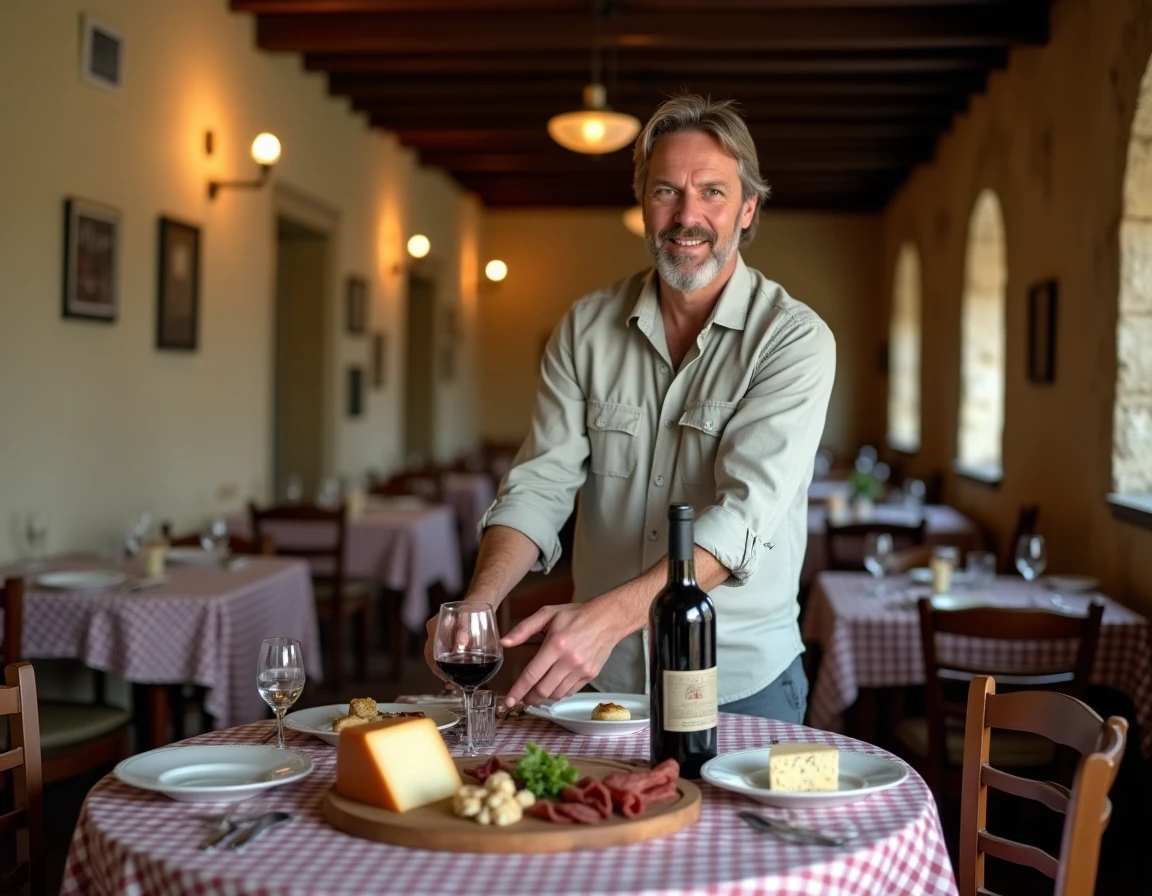
The narratives evoke trattorias serving fresh pasta and sheep’s cheese. This culinary register is common to all of rural Italy. The true gastronomic specificity of a borgo lies in its micro-productions: a cheese aged in a specific cave, a grape variety cultivated on a particular slope, a recipe passed down by a local brotherhood.
Without field data on Pietra d’Alba, we cannot identify any specific specialty. Travelers attracted to this type of destination would do well to target documented borghi where the traceability of products is established.
Traveling in Italy Off the Beaten Path: How to Evaluate a Hidden Destination
Pietra d’Alba illustrates a broader phenomenon. The demand for Italian destinations alternative to classic circuits (Rome, Florence, Venice) continues to grow. In response to this demand, online content multiplies “hidden treasures” without always verifying their concrete existence.
To assess the reliability of a destination presented as hidden, a few criteria deserve attention:
- Check the presence of the place in Italian municipal databases (ANCI site or comuni-italiani.it portal)
- Look for geolocated photographs on independent platforms, not just generic images of Tuscan hills
- Cross-check information with regional guides published in Italian, which cover the most modest hamlets
- Ensure that a listed accommodation actually exists at the indicated address
Italy is home to thousands of authentic borghi that are worth a visit. Some, like Civita di Bagnoregio or Castelmezzano, have solid documentation. Others remain truly hidden, accessible only by secondary roads and absent from organized circuits.
Pietra d’Alba, whether it exists under this name or serves as a collective projection, reminds us that travel begins with verifying one’s sources. Italian borghi do not need to be invented to fascinate: their architectural, agricultural, and human reality is more than sufficient.