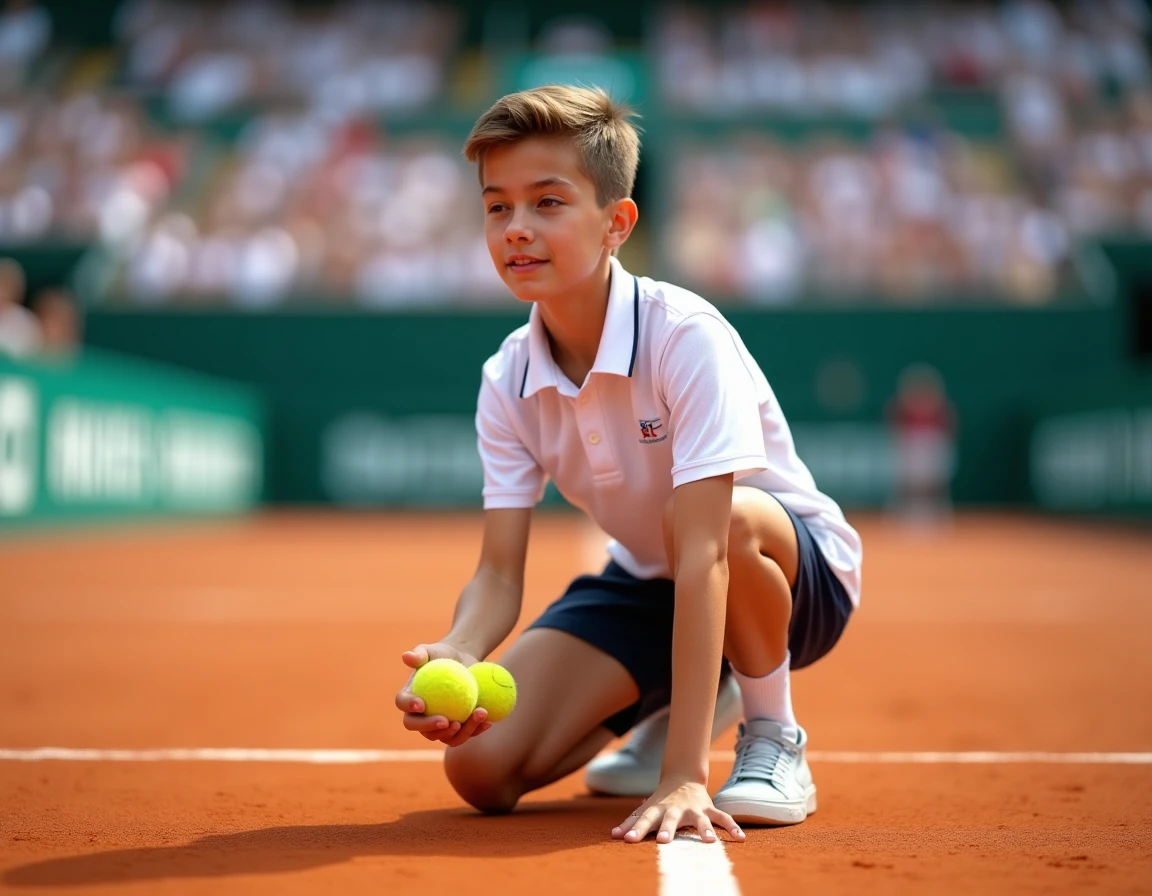
The ball collectors on the professional circuit do not fall under a uniform status. Depending on the tournament, the country, and the organizer, their situation ranges from regulated volunteer work, occasional compensation, to declared seasonal employment. Understanding these mechanisms requires distinguishing the legal frameworks applied to each Grand Slam and the recent developments on the secondary circuit.
Legal status of ball collectors: federal agreement versus seasonal contract
At Roland-Garros, the ball collectors (called “ballos”) are recruited by the FFT as part of a federal program. Their status is that of volunteers supervised by the federation, not employees. No employment contract is signed, and no payslip is issued.
This model is based on a logic of sports training: young people, aged 12 to 16, go through a selection process within their school or club, followed by specific training before the tournament. The compensation takes the form of sports equipment, prizes, and privileged access to matches.
The question of the remuneration of ball collectors becomes more acute when comparing this system to that of the US Open. In New York, the ball kids are recruited under a model similar to student jobs: interview, physical tests, then signing a short contract. They receive a hourly wage above the New York legal minimum, with administrative treatment identical to that of any seasonal employee.
Wimbledon and the Australian Open fall between these two poles, with variable compensation depending on the editions. We thus observe a complete lack of harmonization among the four Grand Slams on this subject.
Mixed compensation on the ATP 250 and WTA 250 circuit: a recent turning point
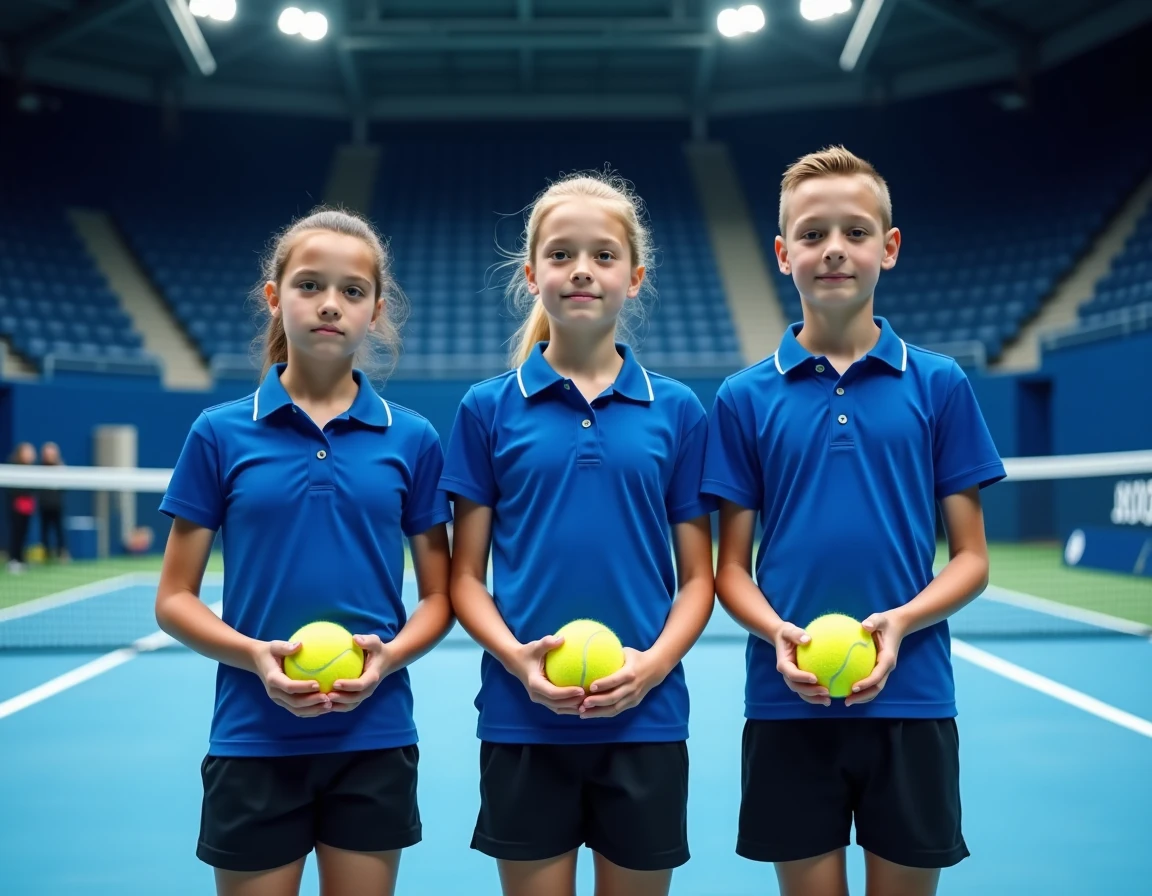
The debate is no longer limited to the Grand Slams. In recent years, second-tier tournaments in Europe have begun to abandon the 100% volunteer model. Events like the ATP 250 in Lyon or certain German tournaments now communicate about a daily participation fee accompanied by equipment provisions.
This evolution responds to increasing public pressure. The contrast between constantly rising prize money for players and the absence of any financial compensation for ball collectors fuels a discomfort that organizers can no longer ignore.
The shift towards this mixed compensation model remains, however, a minority on the circuit. The majority of ATP and WTA tournaments continue to operate with volunteers, often from partner local clubs. Three factors explain this inertia:
- The regulatory framework for child labor in sports events varies significantly from country to country, complicating any standardization.
- National federations view the ball collector program as a tool for promoting tennis among young people, not as a service provision.
- The logistical cost of transitioning to salaried employment (contracts, social charges, HR management) represents a budget item that 250-category tournaments struggle to absorb.
Selection and training process at Roland-Garros
The recruitment process for ballos at Roland-Garros is managed through the FFT’s “We Are Ballos” platform. Applications are open to young licensed club members, mostly educated in Île-de-France. The selection is based on physical criteria (speed, coordination) and behavioral criteria (concentration, stress resistance).
Once selected, the ball collectors undergo several months of training. This program includes exercises for coded movement on the court, mastering the rolling technique (ground ball transfer between collectors), and timed situational drills.
Six collectors are positioned simultaneously on each court during a match. Their rotation follows a strict protocol: changing positions at regular intervals, relief between sets. The goal is to ensure the fluidity of the game, with the shortest possible ball return time to the player.
Comparison of compensation across Grand Slam tournaments
The gap between the four Grand Slams deserves to be clearly stated, even in the absence of public salary grids for all tournaments.
| Tournament | Status | Compensation |
|---|---|---|
| Roland-Garros | Volunteer (FFT program) | Equipment, prizes, match access |
| US Open | Seasonal employee | Hourly wage (above local legal minimum) |
| Wimbledon | Variable by edition | Compensation and equipment |
| Australian Open | Variable by edition | Compensation and equipment |
The American model is the only one that treats the ball collector as a full-fledged worker. This choice stems from New York State labor law, which strictly regulates any activity involving minors in a professional context, including sports.
Upcoming challenges for ball collectors’ salaries in professional tennis
The question of the remuneration of ball collectors in professional tennis is not going to close. Two dynamics push towards increased formalization.
The first is regulatory. European law on child labor in sports events is regularly discussed, and any national legislative evolution could force federations to reclassify the status of their collectors.
The second is media-related. Social networks amplify the perceived gap between the sums distributed in prize money (several tens of millions of euros at a Grand Slam) and the absence of compensation for young people mobilized for two weeks, sometimes under difficult weather conditions.
We recommend that tournament organizers in France closely monitor the evolution of the mixed compensation model adopted by some European ATP 250 events. The shift from pure volunteer work to regulated compensation seems inevitable in the medium term, at least for tournaments whose budget allows it. The federal program at Roland-Garros will likely remain the last bastion of the volunteer model among major circuit events.