
A DIY tool is chosen based on three parameters: the nature of the material being worked on, the expected frequency of use, and the safety standards applicable to the tool. Starting from the project and working up to the tool (rather than the other way around) helps avoid accumulating inappropriate or undersized equipment.
Voltage, torque, and battery type: reading a power tool’s technical sheet
The majority of DIY enthusiasts buy a drill-driver by looking at the price and the brand. The determining criterion is the torque expressed in newton-meters: it indicates the rotational force that the tool can exert. For screwing into soft wood or drywall, moderate torque is sufficient. For drilling into concrete or assembling a framework, significantly higher torque is required.
The voltage of the battery (expressed in volts) gives an indication of the overall power. The higher the voltage, the more the tool can handle heavy-duty tasks. Battery models have largely overtaken corded tools: the 2024 Castorama/OpinionWay barometer confirms a marked increase in the purchase of cordless tools, especially among 18-34 year-olds who prioritize mobility and space-saving.
Also look at the capacity in ampere-hours (Ah) of the battery. A low-capacity battery discharges quickly on a prolonged job site. Having two batteries and a fast charger remains the most functional setup to avoid downtime. Finding all the equipment at Cécile Bricole allows you to compare these technical characteristics in one catalog.

EN 62841 standard and safety of power tools
Consumer buying guides rarely discuss regulations. The European standard EN 62841, revised and strengthened in recent years, governs the safety of power tools sold in Europe. Its requirements have a direct impact on the equipment available in stores.
Recent developments require manufacturers to implement several concrete measures:
- Faster automatic braking on circular saws and grinders, reducing the blade’s stop time after releasing the trigger
- Anti-restart protections that prevent the tool from restarting after a power cut or battery change
- Enhanced safety devices (guards, anti-vibration handles) on high-speed cutting tools
A tool compliant with this standard bears the CE marking. Check for its presence before any purchase, including on online marketplaces where imported models without certification may circulate.
Repairability and lifespan: the criterion that beginners overlook
Buying a cheap tool that breaks down after two years of service costs more than investing in a repairable model. A 2023 study by Que Choisir on drill-drivers highlighted an emerging criterion: the availability of spare parts in the long term.
Several major brands now commit to a minimum duration of spare parts availability, often between seven and ten years. This point deserves to be verified before purchase. A drill motor with replaceable brushes or switch will last much longer than a model with a sealed casing.
Battery compatibility between tools of the same brand
An ecosystem of interchangeable batteries represents real savings over time. If your drill, jigsaw, and sander share the same battery format, you only need to buy additional packs once. Before mixing brands, ensure that the battery platform is identical: the battery format determines the coherence of your tool collection.
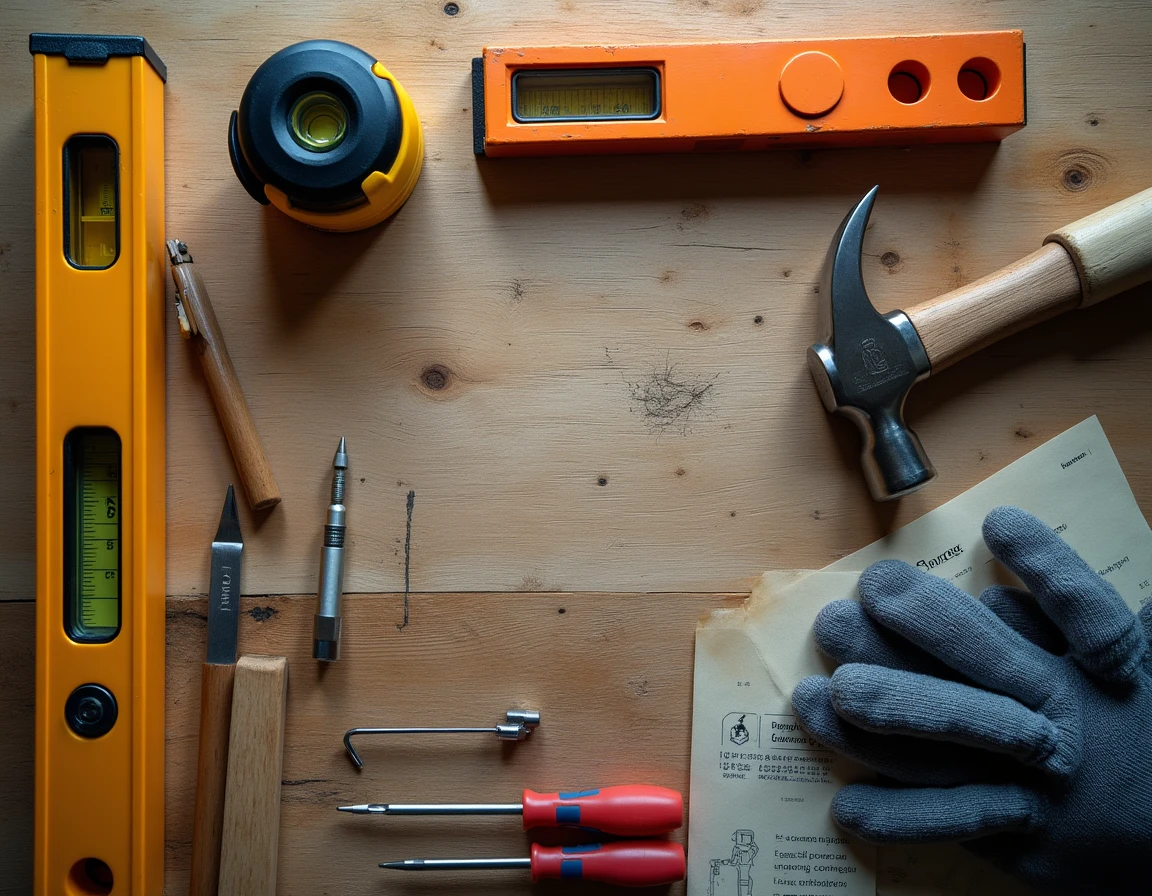
Hand tools for DIY: steel quality and ergonomics
Power tools do not cover everything. A set of screwdrivers, a multi-grip pliers, a tape measure, a spirit level, and a hammer form the foundation of any workshop. The difference between a decent hand tool and a mediocre one lies in two elements: the steel grade and the handle design.
A chrome-vanadium steel screwdriver withstands twisting better than a low-grade steel model. A pliers with precisely machined jaws retains its grip after hundreds of uses, whereas a roughly cast model deforms quickly.
The ergonomics of the handle affects fatigue and precision of movement. A bi-material coating (hard for the structure, soft for the grip) reduces vibrations transmitted to the hand. On a job site lasting several hours, this difference is noticeably felt in the wrist and forearm.
Storing and protecting your tools to keep them functional
A poorly stored tool rusts, dulls, or warps. Saw blades, drill bits, and wood chisels should be kept in cases or individual holders. Metal tools stored loosely in a drawer clash and lose their sharpness. A wall-mounted pegboard or a drawer cart with compartments protects each piece and makes the workshop more efficient.
The choice of DIY equipment relies less on the quantity of tools purchased than on the suitability of each tool for its actual use. A smaller but coherent collection, composed of tools with verified technical characteristics and compatibility with each other, covers the vast majority of domestic projects.